

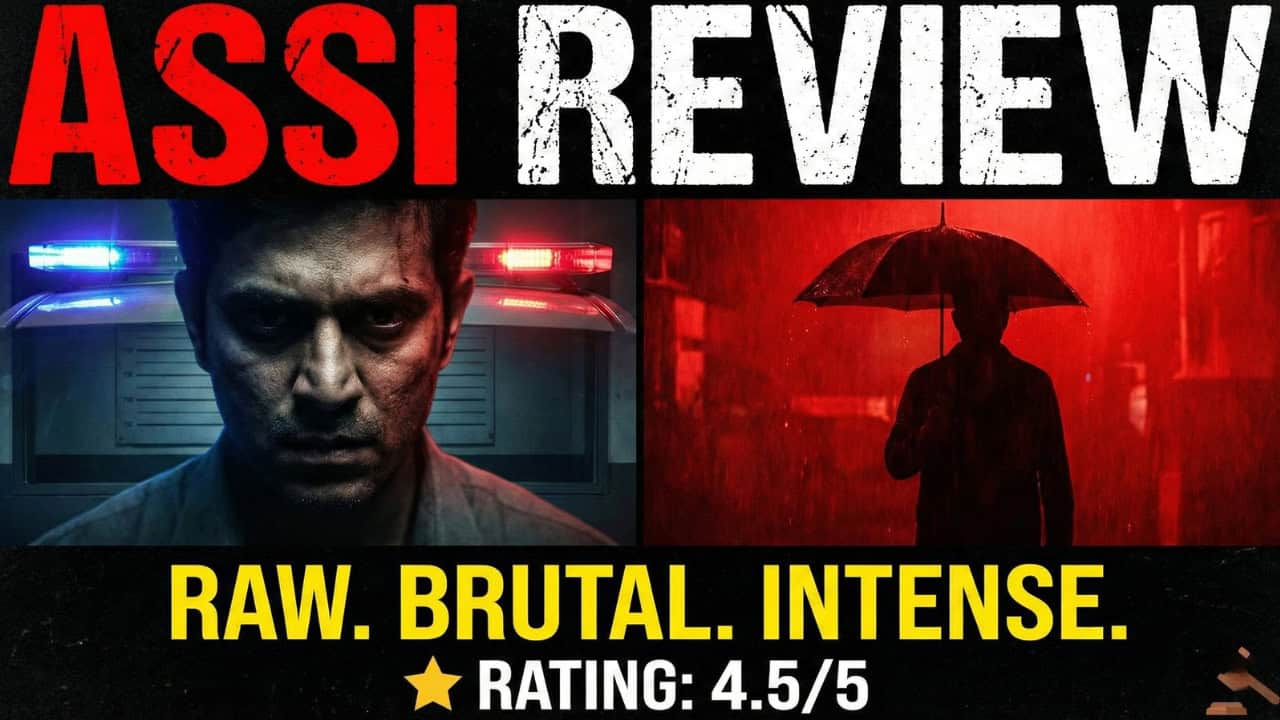
Assi Review
Some films begin gently, giving you time to settle into the world before they start pulling the rug from under your feet. Assi does the opposite. Its very first scene is the kind that makes your skin tighten and your breath shorten—not because it’s trying to shock you with noise, but because it feels raw and intensely alive. Within minutes, you realize this is not a movie that wants your comfort. It wants your attention.
From the start, the film’s nature is gripping, like every scene is carrying a message on its back. Even when something technically familiar shows up, the treatment is never casual. There’s a sense that the camera isn’t merely recording events—it’s pointing a finger, forcing you to sit with what you’d normally want to escape. That’s the energy that runs through Assi: not melodrama, not easy catharsis, but a constant pressure that keeps tightening.
Familiar Setup, Unfathomable Brutality
Yes, there’s a scene involving a car and a girl being picked up from the road—something cinema has shown countless times. But the way rape is presented here is dangerously impactful. The mechanics of such scenes might be “seen before” in terms of setup, yet the brutality is so severe it feels impossible to process with a sane mind. Assi doesn’t play it like a plot device or a sensational moment. It frames it as something monstrous—something that stains everything around it, including the people watching.
What makes it even more devastating is how the film travels into the spaces most narratives soften. The aftermath of a rape survivor is portrayed as a kind of brutality that goes beyond imagination—not because the film piles on gore, but because it highlights the psychological and social destruction with an almost unbearable honesty. In that sense, the movie becomes less “story” and more a brutal mapping of what happens before, during, and after rape—raw in the truest sense.
Complicity That Feels Too Real
The film also explores something that isn’t new as an idea, but becomes freshly disturbing because of intensity: the perpetrators’ families helping erase evidence. On paper, it’s a known reality. On screen, Assi makes it feel like you’re witnessing a system breathing and moving—ordinary faces performing extraordinary cruelty in the name of protection. The hook here isn’t novelty; it’s the way the film holds the act under a harsh light and refuses to blink.
And then comes one of the most dangerous sequences: the scene where the rape victim’s statement is taken. “Khatarnak” is the right word for it. It’s not just tense—it’s the kind of tension that makes you shift in your seat because it shows how trauma gets extracted like a procedure. The filmmaking doesn’t romanticize pain; it shows how institutions can turn suffering into paperwork, how a voice can be questioned until it starts sounding like it doesn’t belong to the person speaking.
Police Work & Cinematography: “Just Wow”
If there’s one technical compliment that feels fully earned, it’s this: the police work and cinematography are simply wow. The way the investigation space is captured, the manner in which scenes are framed, and how the atmosphere is built—it all strengthens the film’s grip. This isn’t glossy beauty; it’s craft used as pressure. You can feel the intent behind the visual language, especially when the story becomes heavier and the room seems to lose oxygen.
Even the pacing feels designed to keep you trapped in the experience. Assi doesn’t let you forget for even a minute what it’s trying to underline: the horrifying reality that in this country, a rape happens every 20 minutes. It’s not presented as a throwaway line. It’s a reminder that hangs over the film like a curse, shaping how you interpret every action, every decision, every silence.
Strong Casting, Uneven Depth
Another major strength: the casting is powerful. The performances carry weight, and the film’s emotional force depends heavily on that strength. However, there’s one place where the acting feels controlled to a fault: Md Zeeshan’s performance comes across as quite slow. To be clear, it’s not poor acting—his work is good—but the character is written with slightly less depth, which makes the performance feel limited in range. It’s the kind of role where you sense the actor could have done more if the character had been given more layers to play with.
The Red Scene That Heats the Theatre
One of the most striking stylistic choices is the recurring “red scene” that appears every 20 minutes, and it genuinely changes the room. It’s not just a visual interruption—it’s like an alarm that keeps ringing. In a theatre setting, it reportedly heats up the atmosphere, making the audience more alert, more tense, more on edge. Whether you see it as symbolic or purely experiential, it works as a pulse that keeps the film’s anger alive.
A Twist Arrives Right on Time
There’s also a moment where the movie slows down slightly—and instead of dragging, it immediately throws a twist in the form of a murder, leading directly to the interval. It’s a sharp move, not just for shock, but for momentum. The film uses the interval like a door slam, telling you: you’re not stepping out of this world easily.
At that point, one major question rises to the surface: how will the case be solved? Because that becomes the remaining thread you hold on to—the one route that can take the story somewhere beyond suffering and into consequence.
Rape vs Vigilante: Impactful, But Also a Detour
Assi also introduces the conflict of rape vs vigilante justice, and it lands as a socially impactful issue. It forces viewers to confront uncomfortable questions: what happens when faith in systems collapses? what does “justice” look like when the world feels designed to protect the guilty?
At the same time, the film has a noticeable weakness here: it shifts away from the case and moves toward the vigilante angle. That’s where it feels like it slips a little off track—slightly wandering, slightly “bhatki hui”—even though it does keep trying to return to the main line. This wobble doesn’t destroy the experience, but it does create moments where you wish the film had stayed tighter to the case instead of leaning so much into that alternate lane.
Still, one addition in this vigilante space is undeniably strong: the “umbrella man” as vigilante is a great touch. It’s memorable, it adds a distinct flavor, and it gives the film a symbolic punch without needing extra explanation.
Courtroom Brutality Done Right
The film takes its time reaching the courtroom cross-examination, but once it arrives, the experience reportedly becomes intensely satisfying in a grim way. Questioning the rape survivor in the middle of court is brutal and deeply intense, and the film doesn’t soften it for palatability. Even more powerful is the questioning of a child on the stand—a moment that doesn’t just affect the story, but feels like it places a mirror in front of society and forces silence. Not the peaceful kind—an accusing, heavy silence.
Documentary-Like Realism & A Shattering Finish
By the time the film reaches its later stretch, it stops feeling “filmy” and starts carrying a documentary-like texture—as if it’s wrapped itself in reality rather than cinema. And then comes Taapsee’s final monologue, described as heart-wrenching, the kind that doesn’t leave you with tears for drama but with a dull ache that sits behind your eyes.
Finally, the last scene hits even harder, shaking you further when you think you’ve already absorbed all the impact you can handle.
Verdict
Assi may tell a familiar story, but it proves that familiarity doesn’t reduce impact—sometimes it deepens it. The film is messy in places where it drifts toward the vigilante thread, yet it remains fiercely gripping, technically strong, emotionally punishing, and socially confrontational.
Rating: 4.5/5
